
Table of Contents
ToggleA cramped kitchen doesn’t have to stay cramped. Whether you’re working with a galley layout, a studio apartment, or just outdated cabinet space, smart kitchen storage ideas for small kitchens can transform how you cook and move through the space. The trick isn’t buying more, it’s using what you have smarter. This guide walks through proven strategies that work: maximizing vertical real estate, organizing existing cabinets like a pro, reclaiming dead corners, and choosing furniture that earns its footprint. None of these require permits or a contractor.
Key Takeaways
- Kitchen storage ideas for small kitchens focus on maximizing vertical wall space with floating shelves, magnetic strips, and pegboard panels rather than adding more cabinets.
- Decluttering by removing unused items reduces kitchen contents by 20–30%, making organization more manageable and effective for tight spaces.
- Invest in affordable organizers like drawer dividers, lazy Susans, and tension rods to double cabinet efficiency and eliminate wasted corner space.
- Multi-functional furniture such as rolling carts, narrow work islands, and slim pantry cabinets provides storage without stealing permanent floor space.
- Reclaim dead corners and gaps with pull-out carousels, sliding shelves under sinks, and narrow rolling carts to transform overlooked zones into usable storage.
Maximize Vertical Space With Smart Wall Storage
Small kitchens have one asset in abundance: wall space. While counter and cabinet real estate fills up fast, walls stay empty long enough to solve storage problems.
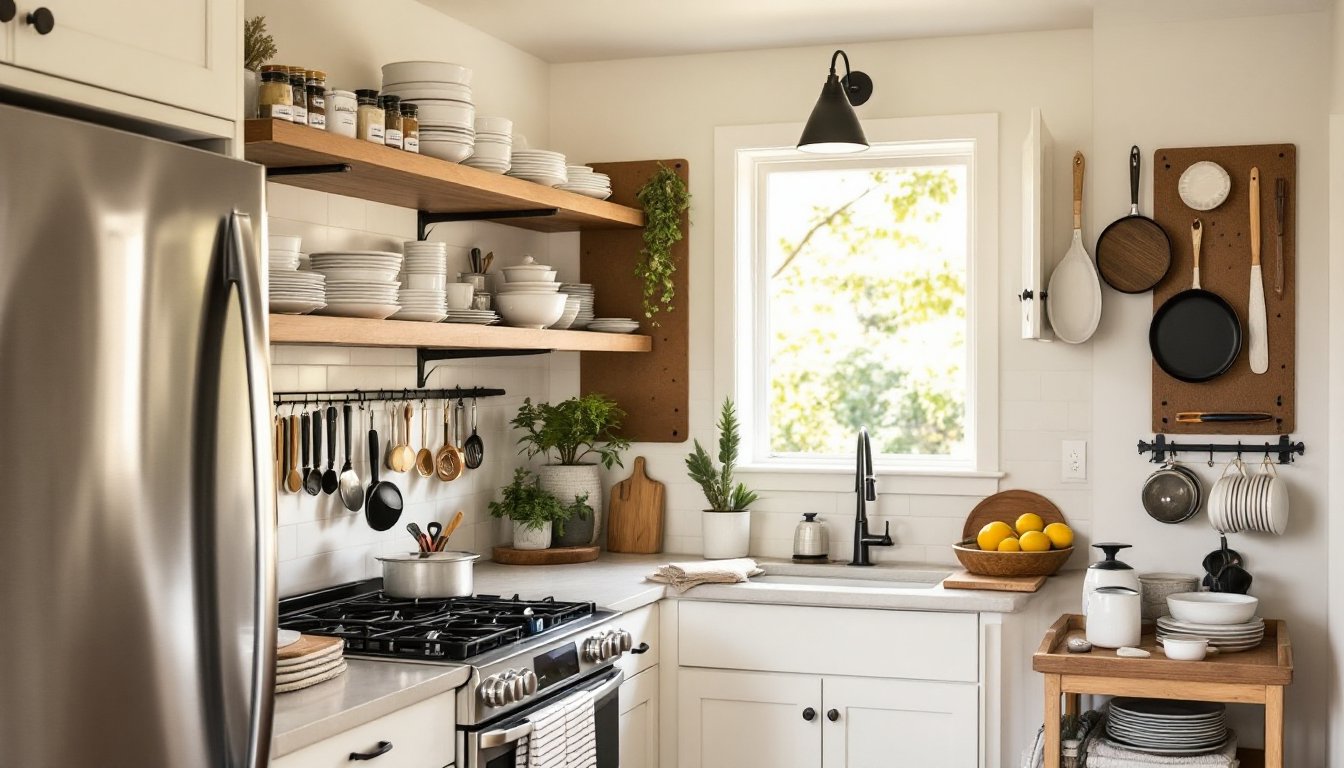
Open shelving works best for items you use daily, plates, bowls, glasses, cookbooks. Install floating shelves (typically 12 to 24 inches deep) at eye level and above, using quality L-brackets rated for at least 50 pounds per shelf. Keep in mind that shelves packed with jars and dishes will be heavy, so locate studs and anchor properly into ½-inch drywall or use toggle bolts if you must hit the space between studs. Spacing shelves 14 to 16 inches apart gives comfortable clearance without waste.
Magnetic strips mounted along a backsplash or side wall hold metal measuring spoons, knives, and shears, keeping them within arm’s reach and off the counter. Pegboard panels (usually 2 feet by 4 feet) are affordable and infinitely customizable: hook-and-basket systems hold pans, utensils, and lightweight appliances. A tension rod hung inside upper cabinets grabs hanging cups by their handles, doubling usable space.
Wall-mounted magnetic spice jars ($20–40 per set) replace traditional spice racks that hog shelf space. Label each jar clearly so you’re not squinting mid-recipe. These work especially well on the side of a refrigerator or on a narrow wall adjacent to the stove. Kitchen strategies that work in tight spaces often rely on this kind of vertical thinking.
Organize Your Cabinets for Maximum Efficiency
Declutter and Remove What You Don’t Need
Before you buy a single organizer, empty your cabinets and assess what’s actually there. Pull out every plate, bowl, glass, and gadget. Be honest: if you haven’t used that bread maker in three years, it doesn’t live in your kitchen anymore. Donate or sell duplicates, no one needs four colanders.
This process usually cuts usable items by 20–30%. It’s the single most important step because you can’t organize what you don’t need. Once you’ve trimmed, group like items: all plates together, all drinking glasses in one zone, all canned goods in another. This mental map makes finding things and putting them back intuitive.
Invest in Drawer Dividers and Shelf Organizers
With fewer items, organize what remains ruthlessly. Bamboo or plastic drawer dividers ($15–30 per set) section utensils, flatware, and kitchen tools so each item has a home. Use adjustable shelf risers or stackable shelf bins to double your vertical cabinet real estate: a standard cabinet shelf becomes two or three usable layers when you stack strategically.
For canned goods, lazy Susans ($10–20) make deep cabinet corners actually accessible, no more reaching to the back and knocking things over. Pull-out sliding baskets or wire racks install inside cabinet frames and let you access items without removing everything in front. A tension rod installed inside a cabinet holds plastic wrap, foil, and paper towel rolls vertically, saving space and preventing roll-unraveling.
Door-mounted organizers with small baskets hold frequently used items, oils, vinegars, seasoning packets, within quick reach. Don’t overload cabinet doors: a typical door can hold roughly 10–15 pounds safely. Essential kitchen tips often start with this kind of systematic organization that makes cooking faster and less frustrating.
Make Use of Underutilized Corners and Gaps
Dead corners and awkward gaps waste premium kitchen space. A blind corner cabinet (the angled interior space where two cabinets meet) can remain a black hole, or you can install a pull-out corner carousel or magic corner organizer ($60–150). These swing-out shelves rotate, bringing back items that would otherwise require reaching and bending.
Narrow gaps between the refrigerator and a wall, or between cabinets and the corner, fit a slim rolling cart (typically 8 to 12 inches wide) that slides in and out. Stock it with less-used items like cake pans, baking sheets, or serving platters. Tall, narrow cabinets beside or above appliances hold vertical dividers for cutting boards, baking sheets, or cooling racks: items stay flat and accessible instead of stacked haphazardly.
Under-sink space often becomes a tangle of cleaning supplies and plumbing. Add a pull-out sliding shelf beneath the sink, a tension rod for spray bottles, and a tiered cabinet organizer to corral bottles and pods. Just keep any toxic cleaners high and clearly labeled, away from food and children.
The space above cabinet tops, if your ceilings allow, works for decorative baskets holding bulk pantry items, seasonal serving dishes, or extra linens. Don’t store food there unless temperature and humidity are stable: kitchens heat and cool, and moisture ruins packaged goods quickly. Kitchen ideas that work with existing layouts often focus on reclaiming these overlooked zones.
Choose Multi-Functional Furniture for Your Kitchen
Small kitchens benefit from furniture that does more than one job. A narrow, deep work island (roughly 24 inches wide, 48 inches long) fits into tight layouts and provides prep surface plus storage shelves underneath. Some islands include a wine rack, spice racks, or hanging rod for towels, every surface works.
A butcher-block cart on wheels moves where you need it: breakfast prep at the counter, drinks station during entertaining, tucked against the wall when not in use. Unlike a fixed island, it doesn’t steal permanent square footage. Look for models with enclosed shelves (roughly $80–200) to hide clutter while keeping things accessible.
Bar-height seating along a counter gives you dining and prep surface in one footprint. Stackable or backless stools tuck under the counter when not in use, freeing floor space. Avoid tall-backed chairs that steal headroom visually and physically.
A slim pantry cabinet standing on the floor against an unused wall or inside a closet extends your storage without sacrificing a cabinet’s worth of counter access. These tall, narrow units (typically 24 inches wide, 72 inches tall) hold shelf-loads of canned goods, dry ingredients, and kitchen equipment in a footprint smaller than many full-size cabinets.
Research from sources like Apartment Therapy and Real Simple consistently shows that multi-use furniture reduces clutter and makes small spaces feel larger because the eye isn’t cluttered by single-purpose items taking up room. Kitchen examples that maximize storage often feature these kinds of thoughtful, dual-purpose pieces.
When shopping, measure your space carefully, bring a tape measure and note doorway widths, ceiling height, and clearance needed for appliance doors to open. A cart that fits the showroom might not fit your kitchen, or worse, it might block a cabinet from opening.
Conclusion
Small kitchen storage works when you think vertically, declutter ruthlessly, and choose pieces that pull their weight. Start with wall space and cabinet organization, they’re free or cheap, require no installation, and yield immediate results. Then invest in corner solutions and multi-use furniture if your budget allows. Most small kitchens don’t need more cabinets: they need smarter ones. Combine these strategies and your cramped kitchen becomes a functional, efficient space where cooking actually feels good.