
Table of Contents
ToggleWalk into most American kitchens and you’ll find a bottle of ketchup sitting on the pantry shelf, or maybe the refrigerator door. The question of whether ketchup should be refrigerated has sparked more dinner table debates than you’d expect for a condiment. The answer depends on several practical factors: how often you use it, how long you plan to keep it, and what the manufacturer recommends. This guide cuts through the confusion and gives you the straight story about storing ketchup properly, so it stays fresh and flavorful without taking up valuable fridge real estate unnecessarily.
Key Takeaways
- Once opened, ketchup should be refrigerated according to manufacturers like Heinz, while unopened bottles stay fresh at room temperature for 18–24 months.
- Opened ketchup lasts 6–8 months in the refrigerator but only 2–3 months in a cool pantry, making temperature the biggest factor in shelf life.
- Ketchup’s natural acidity slows bacterial growth, but refrigeration is essential after opening to prevent mold and flavor degradation caused by enzymatic breakdown.
- Watch for off smells, visible mold, texture changes, or off-flavors as signs that ketchup has degraded and should be replaced.
- Label opened bottles with the opening date, store them on refrigerator shelves (not the door), and keep the cap sealed tightly to maximize freshness and prevent contamination.
The Official Storage Guidelines for Ketchup
The short answer: once opened, ketchup should be kept in the refrigerator. Most major ketchup manufacturers, including Heinz, the market leader, print refrigeration instructions on the label after opening. Unopened bottles are fine at room temperature in a pantry or cabinet, as long as they’re stored away from direct sunlight and heat.
Here’s the breakdown. Heinz ketchup, which accounts for roughly 60% of the U.S. market, explicitly states on its bottles to refrigerate after opening. French’s and store-brand versions typically follow the same guidance. The reason is straightforward: once the seal is broken, the condiment becomes vulnerable to bacterial growth and flavor degradation at warmer temperatures.
Unopened Bottles vs. Opened Bottles
UnopenedBottles don’t need refrigeration. They’re sealed, stable, and designed to sit on shelves at room temperature for months. Check the “best by” date on the bottom or back of the bottle, most unopened ketchup lasts 18–24 months from the manufacturing date.
Once you crack the seal and pour your first serving, that changes. The bottle is now exposed to air and contaminants every time you open it. Bacteria and mold spores can enter, especially if you’ve dipped a used utensil into the bottle or if moisture gets inside. Refrigeration dramatically slows bacterial growth and preserves the flavor, acidity, and texture.
The fridge is your safest bet after opening. Most opened ketchup will stay good for 6–8 months in the refrigerator, though the quality may degrade slightly after 3–4 months of storage.
Why Ketchup’s Acidity Matters
Ketchup is acidic, very acidic. Commercial ketchup typically has a pH of around 3.5 to 3.8, which makes it naturally hostile to most harmful bacteria. Vinegar and tomato paste, the primary ingredients, do the heavy lifting here. This high acidity is why ketchup has such a long shelf life compared to other condiments.
But, acidity alone doesn’t make ketchup immortal. The acidity slows bacterial growth, but it doesn’t prevent it entirely, especially once the bottle is opened and oxygen gets inside. Mold can still grow on or near the opening if the bottle isn’t sealed tightly between uses. Temperature plays a critical role in how fast degradation happens.
When you keep ketchup at room temperature after opening, the enzymes in the condiment continue to break down the structure at a faster rate. The color darkens slightly, and the flavor can become sharper or duller depending on the ketchup brand. According to food storage research, opened ketchup kept in warm kitchens deteriorates noticeably faster than refrigerated bottles. Cold temperatures slow enzymatic activity and bacterial growth, preserving both safety and taste.
How Temperature Affects Ketchup Quality and Shelf Life
Temperature is the biggest variable in how quickly ketchup degrades. Every 10-degree Fahrenheit increase in storage temperature roughly doubles the rate of chemical reactions in food, a principle known as the “rule of 10.” This applies to ketchup.
At refrigerator temperature (around 40°F), ketchup changes very slowly. Enzymes that break down color, flavor compounds, and texture work at a crawl. At room temperature (68–72°F), those same reactions proceed at a much faster clip. In a hot kitchen or pantry (75°F or warmer), degradation accelerates significantly.
Practically speaking: a bottle kept in a cool pantry might hold its quality for 2–3 months after opening, while the same bottle in the refrigerator stays good for 6–8 months. In a warm kitchen with a stove nearby, you might notice changes within weeks. If you live in a hot climate or your kitchen gets direct sunlight, refrigeration is even more important.
This is why storage location matters as much as the appliance. A dark pantry stays cooler than a cabinet above the stove or near a sunny window. If you’re storing ketchup in a pantry, choose the coolest, darkest spot available, usually a lower cabinet away from heat sources.
Signs Your Ketchup Has Gone Bad
Ketchup doesn’t spoil in the typical sense, it won’t give you food poisoning the way milk or meat might. But it can degrade to the point where it’s not worth using. Here’s what to watch for.
Off smells. Open the bottle and take a sniff. Fresh ketchup has a sharp, tangy tomato-vinegar aroma. If it smells fermented, musty, or sour (worse than the normal vinegar tang), toss it. That’s a sign of bacterial activity or mold growth.
Visible mold or discoloration. Mold can grow on the rim or inside the bottle if moisture gets trapped. Any fuzzy growth, dark spots, or streaking that wasn’t there before is a red flag. Discoloration is less critical, ketchup naturally darkens over time, but paired with smell changes, it’s a sign the bottle is past its prime.
Texture changes. Fresh ketchup is smooth and pours easily. If it becomes very thick, separates into layers, or develops an odd sludgy consistency, it’s degraded. Shake it first, some separation is normal, but if shaking doesn’t restore the texture, replace it.
Taste test. If you’re unsure, a tiny taste (just a dab on your finger, not eating a spoonful) will tell you. Off-flavors, excessive bitterness, or a fermented taste mean it’s time for a new bottle. When in doubt, throw it out. A 50-cent bottle of ketchup isn’t worth risking.
Practical Storage Tips for Your Kitchen
Here’s how to store ketchup like you know what you’re doing, because now you do.
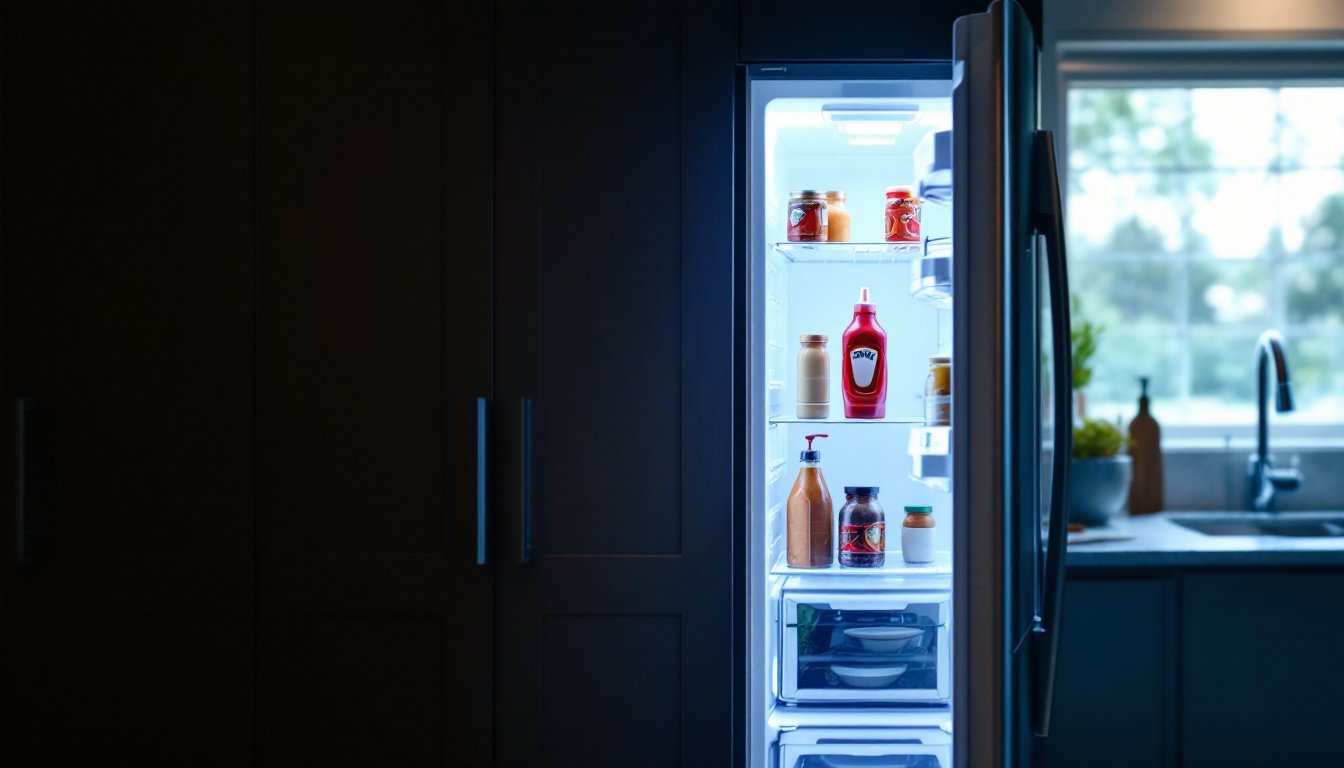
Keep opened bottles in the refrigerator. Store them on a shelf (not the door, if possible) where the temperature is most stable. Refrigerator doors experience more temperature fluctuations from opening and closing.
Seal the cap tightly after every use. A loose cap lets air and moisture in, speeding up degradation and mold growth. Make this a habit, it takes one second and makes a real difference.
Store unopened bottles in a cool, dark pantry. A low cabinet away from the stove or direct sunlight is ideal. Avoid above-cabinet storage or areas near heat sources.
Label with the opening date. Use a marker to jot the date you opened the bottle on the label or cap. You’ll know at a glance whether it’s still within the 6–8 month window. This is especially useful if multiple people use the ketchup.
Consider smaller bottles for occasional use. If you don’t use ketchup frequently, a smaller 10–12 oz bottle might be smarter than a family-size 20 oz bottle. You’ll finish it while it’s fresher, and it takes up less fridge space. This approach is practical for single households or those that mainly cook at home.
Keep a backup unopened bottle in the pantry. That way, when you finish the open bottle, you have a sealed backup ready to go. No surprises mid-meal when the open bottle has already degraded.